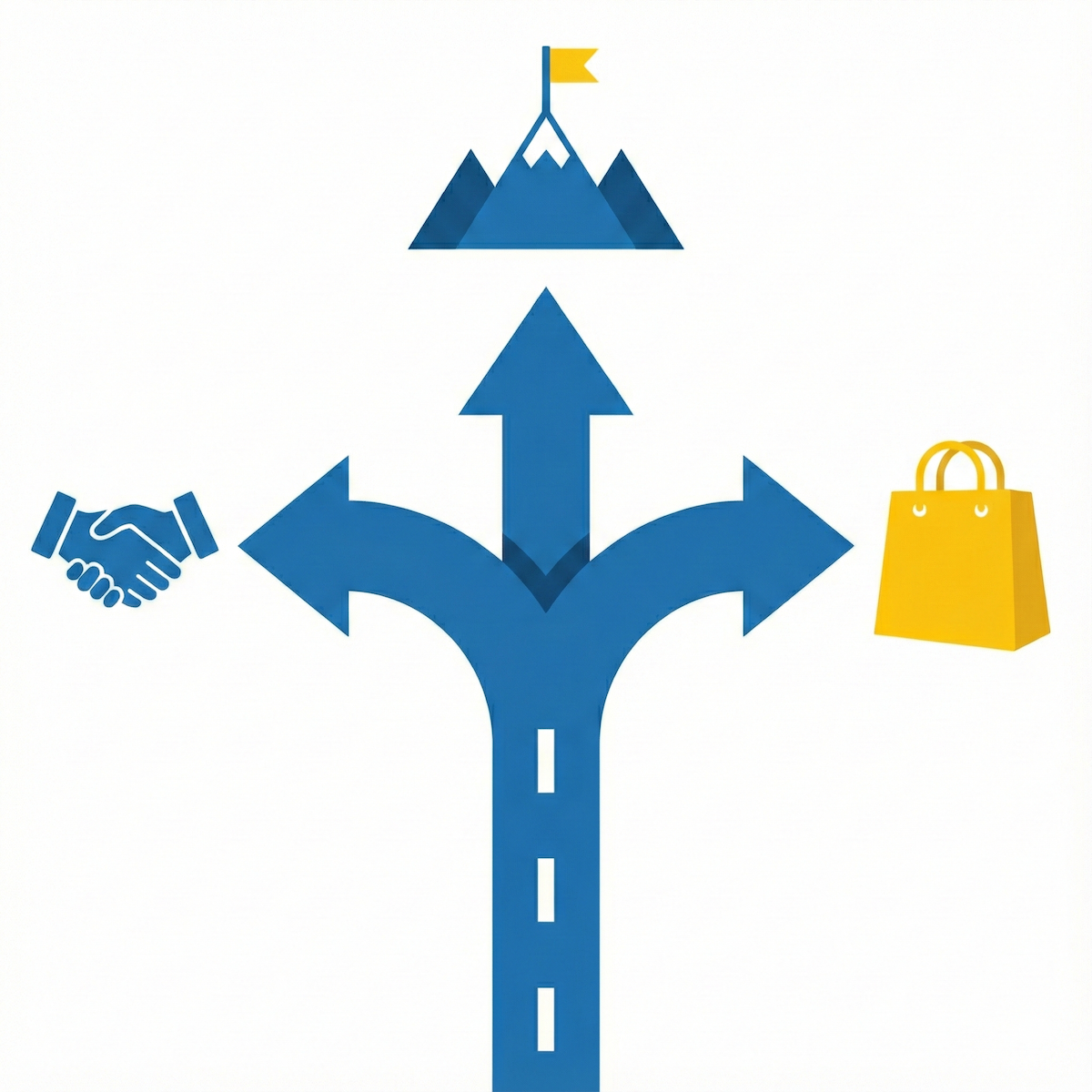
What Type of Website Does Your Business Actually Need?
Core Strategy For First-Time Website Builds
It’s never been easier to push-button publish a website for your business. And it’s great to think about establishing your online presence. But before you build, it's worth asking: What is this site really for? Because there are three fundamentally different kinds of business websites, and each serves a distinct purpose.
Type 1: The Business-Card Website
What it is: A digital placeholder — a clean, simple page with your name, contact info, maybe a short service description. Think of it like your online business card.
Who it’s for:
- If you’re a solo practitioner, consultant, or early-stage freelancer, just trying to get found
- You want people to be able to look you up, see you exist, and never lose your contact info
Goals: Show credibility. Make contact easy. Offer a minimal presence that proves you’re real.
A little mystery can go a long way. And ultimately, if you don’t need your website to oversell what you’re doing or you’re just cogent of letting a website eat up your time (that could be better spent on actually getting hand-on in your business) this is the option for you.
This type of website doesn’t try to wow with design or sell anything: it simply exists so people can validate you and your business, and reach out through a phone call or a web form. For many new businesses, that’s enough — especially when you’re just launching and have bigger problems to tackle.
If your business development is happening off-line, in networking events or referrals from your core customer base, start here.
Type 2: Solutions-Based / Authority Website
What it is: A content and credibility hub that positions you (or your firm) as the expert. Think law offices, medical practices or specialties, and custom crafts like luxury furniture design. It doesn’t just promote products, however: it also frames you as the go-to problem-solver for people who don’t yet know there is a solution.
When it works:
- You offer complex services, custom work, or high-end solutions that need to attract a well-qualified audience
- Your prospective clients are searching for answers and need to get validation about you as a subject matter expert: they need to understand the problem, the solution, and why you’re the right one to deliver it
Goals: Build trust. Demonstrate expertise. Guide prospects from confusion to clarity to conversion.
A solutions-based website allows people who are “leaning in” on the internet, searching for more information and a potential solution, to find you and learn about your work. It speaks to people who aren’t even sure they have a problem — or know they have a problem, but don’t know what a good solution looks like. Through content (articles, case studies, FAQs), it moves them from “Maybe this is for me” to “I need this… and I need you.”
Type 3: The E-Commerce Website
What it is: A full shopping experience online. Product catalog, search filters, reviews, a cart, checkout, and shipping/payment flow.
When it works:
- You have tangible products to sell (physical or digital)
- Your business depends on volume, repeat purchases, or self-serve buying
Goals: Convert interest into sales automatically. Let people browse, compare, and buy — without needing to talk to you.
This site is built for scale. When done right, it removes friction: people don’t have to email or call you, they just hit “Add To Cart,” enter payment info, and you fulfill. If you’re building an online brand, the website is the entire sales experience – so it better be flawless.
So, Which One Should YOU Build?
That depends on your business needs, and the role your website will play in your business growth.
If you’re solo and starting small, go for a business card style site. It’s minimal, low-cost, and enough to prove you exist.
If what you offer is complex, needs explanation, or builds trust, you want a solutions-based subject-matter-expert website.
If you sell packaged products or digital downloads and want passive buying from anyone, e-commerce is the obvious evolution -- but can be the most technically challenging.
You can (and often should) combine elements; an e-commerce site can benefit from a content strategy like a solutions-based site would have; a business-card site could expand to have a small merch shop, too. But only after you understand the core purpose.
Remember to consider the effort behind making your website a success is dependent on what success means for you.
Want help figuring out which setup fits your business? Drop a note. I’d be happy to help you map it out.